The governed layer for agency client work
A client project doesn’t live in one app — it moves through Slack, Figma, Drive, a CRM, and now a copilot in each of them. Route that work through GRID and every action is governed before it lands: on brand, past the right approvals, inside each client’s scope — with a trace you can show for exactly what happened.
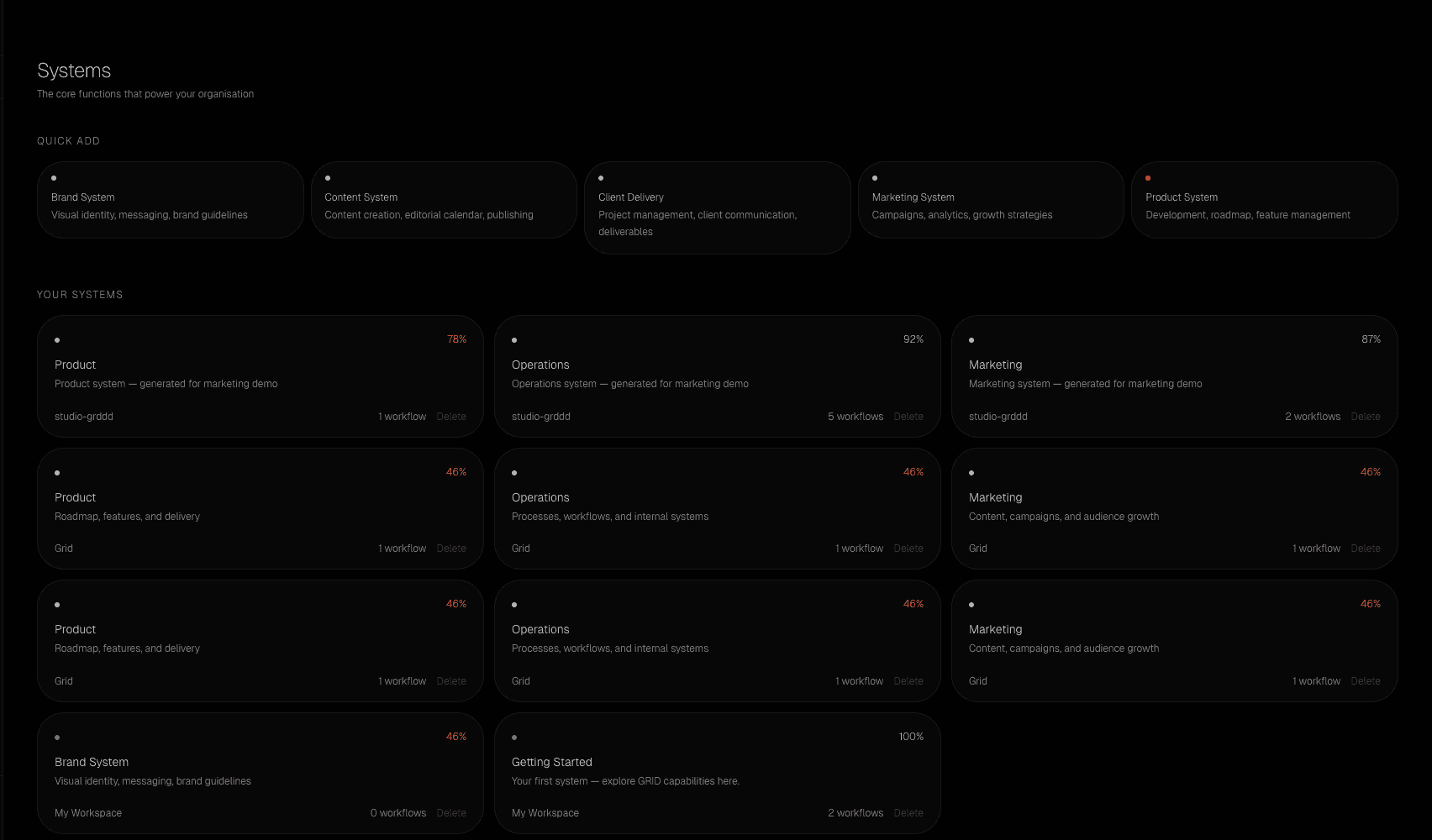
The work moves through an Environment, not an app
A single client campaign crosses a brief, brand guidelines, creative, copy, review, approval, media, and reporting — each in a different tool. Your team is the connective tissue holding it together by hand, and AI is now doing more of the work inside each of those tools. The coordination is the job. GRID sits underneath it as one Environment, so the project has a spine instead of a dozen handoffs.
AI moves faster than your approvals
Every tool has a copilot now, and none of them know this client’s brand rules, which claims need legal, or what has already been approved. GRID does. Before GRID acts on a connected system, it checks the action against the constraints you set — brand, required approvals, client scope — and holds anything that isn’t cleared for a person to decide. Velocity, without losing control of it.
Every action on the record — per client
When GRID acts, it shows its work: what it read, what it decided, what it skipped, and who approved it — recorded against the right client. That is the difference between “the copilot sent something” and a clean account of who did what, on which project, and why. When a client asks, you have the answer. When something needs undoing, there is a reversal path.
It gets sharper every campaign
GRID watches where client work slows — approvals that stall, a step that always needs rework, a workflow that depends on one person — and surfaces it as a Signal. The next campaign runs on what the last one taught it. You are not only running client work faster; you are watching how your studio actually operates, and fixing the parts that break.